
Defeating the Summer "Sweat": Why Your AC Ducts Are Condensing and How to Fix It
2026-06-22
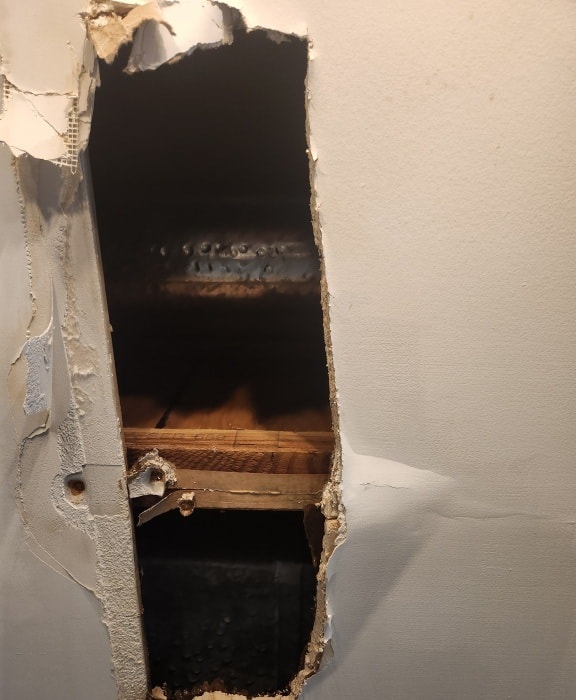
My name is Matt Sera. I’ve spent 16 years helping Maryland homeowners stay comfortable, but the extreme humidity of 2025 brought us a record-breaking number of calls about a frustrating, stressful enemy: sweating ductwork and condensation. As founder and former energy auditor, insulation installer, and operations manager, I personally troubleshot dozens of these cases last summer for homeowners who felt completely stuck after getting conflicting, piecemeal advice from other companies.
One case that sticks with me was a townhouse in Silver Spring built in the 1980s. With a newborn baby in the house, the parents were facing massive duct sweating that had turned into mold on their garage ceiling. It took a team effort to fix—waterproofing, insulation, duct sealing, and adjusting their thermostat habits—but we solved it. Every home is a system, and based on that family's success and dozens of others last year, here are the essential lessons learned that every Maryland homeowner needs to know this summer.
1. Why is My Thermostat the Main Cause of Duct Condensation?
The single most critical factor in duct condensation is your thermostat setting.
- The 75°F Standard: Residential HVAC equipment is engineered and designed by manufacturers to maintain an indoor air temperature of 75°F with 50% relative humidity.
- The "Below 75" Risk Zone: In our years of experience helping Maryland families, nearly all condensation issues occur in homes cooled below 75 degrees.
- The Physics of Colder Air: When you drop your thermostat to 70°F instead of 75°F, the air leaving your vents drops from a safe 55°F to a riskier 50°F. This drop makes your metal ductwork and equipment cabinets cold enough to push them past the "dew point" where moisture in the air turns into liquid water.
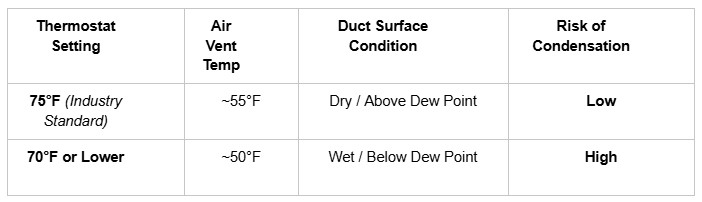
Raising your thermostat is the single most effective, immediate, and free action to stop a majority of condensation issues.
2. Why Your AC Can’t Keep Up with Moisture
Air conditioners are designed to do two things: lower the air temperature (sensible cooling) and remove moisture (latent cooling). However, an HVAC system has physical limitations. It cannot fully control humidity if indoor moisture sources are excessive or if temperature set points are too low.
- The Efficiency Trade-Off: Modern AC units are highly optimized for energy efficiency (SEER/EER ratings) by focusing heavily on dropping the temperature quickly. This means they actually remove less humidity than older systems from 20 years ago. If your AC satisfies the thermostat temperature too fast, it won't run long enough to pull moisture out of the air.
- Colder Air is Harder to Dry: Ironically, an HVAC system gets worse at removing humidity as the incoming air gets colder—drying air at 70°F is significantly harder than at 75°F.
3. The "Hot Upstairs" Compensation Trap
Many homeowners don't overcool their homes because they need 70°F air to be comfortable—they do it to compensate for temperature differences across the home. If your second-floor bedroom is baking at 80°F, it is natural to crank the main thermostat down to 72°F just to make the bedroom a bearable 76°F for sleeping.
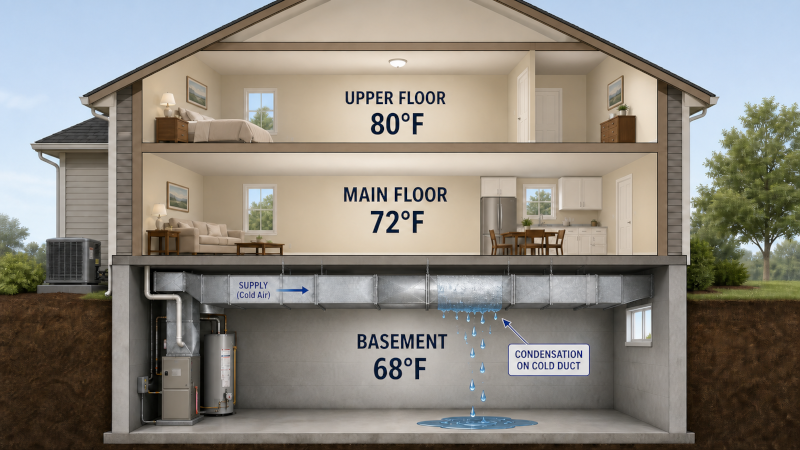
Unfortunately, this forces your lower levels and basement ductwork to stay dangerously overcooled during the hottest parts of the day, resulting in severe sweating. There are a few possible solutions here:
- Adjust Vent Positions and Dampers - This can help or hurt your situation. Minor adjustments like adjusting a damper on a supply trunk or closing a couple of registers can help direct more air flow to those hard to cool areas, but for some duct systems these adjustments can drive up the static pressure in the HVAC system. This will reduce dehumidification, lower supply air temperatures, and potentially depressurize the area with HVAC equipment which will pull more humid outside air where you want it least - near your cold ductwork.
- Reduce Temperature Differences: By upgrading insulation, sealing external air leaks, and improving airflow at HVAC vents through professional duct sealing, you can even out temperatures. Less of a temperature difference means less overcooling of the home to compensate for those uncomfortable rooms.
- Change When to Overcool the Home: Many homeowners can reduce the bad side effects of overcooling by simply adjusting when they run their system lower. That upstairs bedroom that is too hot to sleep in? Try cooling it just an hour or two before bed, past the hottest part of the day when outdoor temperatures drop and condensation risks are lower. This is a great solution for homeowners who don’t use those rooms all day long.
4. The Solution Requires a Team Effort
Because condensation is caused by a combination of cold surfaces, air movement, and moisture, there is rarely a single "magic bullet" fix. Completely solving the problem typically requires a multi-step approach involving multiple specialized contractors:
A. HVAC Technicians
A trained HVAC tech needs to verify that your system is operating within manufacturer specifications. They must ensure the unit is accurately sized for both cooling and moisture removal. If you are insistent on keeping your home below 75°F, an HVAC professional will likely need to install a whole-house dehumidifier directly into your duct system to continuously pull water out of the air without overcooling the house.
Keys to success here:
- Ensure the HVAC system is properly sized for both Sensible AND Latent cooling loads.
- Verify the HVAC system is operating properly—checking refrigerant charge, static pressure, and the cleanliness of coils and filters.
- Install a whole-house dehumidifier to continuously remove humidity at lower temperatures.
B. Home Performance & Insulation Contractors
Since hot, humid outdoor air leaking into framing cavities is a primary source of condensation moisture, a home performance contractor is vital. We use specialized tools (like blower door tests) to locate and seal hidden air leaks and duct leaks that are drawing humid air inside. We can also install proper duct insulation to keep cold duct surfaces isolated from ambient humid air, moving the surface temperature safely above the dew point.
Keys to success here:
- Have a Home Energy Audit: Use a blower door to determine where the major air leaks are and prioritize which areas to focus on first. This is incredibly helpful when drywall has been removed because of condensation damage and you need to identify where the hot, humid outside air is creeping in.
- Seal Air Leaks Throughout the Home: Target attics, band joists, cantilevers, and crawlspaces—especially those close to the area of condensation. This evens out temperatures around the house and lowers the total latent load coming into the building. Sealing the attic also reduces the "chimney effect" driving outside air into the house.
- Seal Duct Leaks: Use specialized duct-sealing technology (like Aeroseal) to seal leaks in impossible-to-reach areas like floor joist cavities, which can pull in unconditioned air and prevent cooling from reaching distant vents.
- Insulate Ductwork: Insulate as much of the ductwork as is accessible. We’ve chased condensation from one part of the duct system to another when we tried to insulate only the spot where sweating was first visible. You will likely need a mix of fiberglass duct wrap and spray foam to tightly encapsulate ductwork flush against subfloors or framed walls.
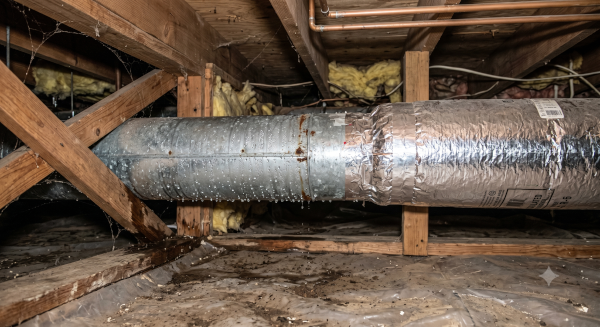
C. Landscaping, Waterproofing, & Plumbing Specialists
Liquid water pooling near your foundation, leaky pipes, or unconditioned crawlspaces act as massive humidity engines for your home. Plumbers, waterproofing experts, and landscapers play a critical role by redirecting external water away from the lower levels of your structure, starving the home of the raw moisture that later condenses on your ducts.
Keys to success here:
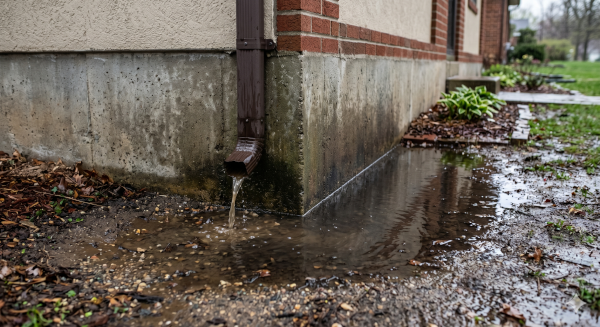
- Keep downspouts and sump pumps discharging at least 5 feet away from the house to a location that grades away from the foundation. It is also important to regularly test sump pumps. We’ve found multiple homes with sky-high indoor humidity where the sump pump had completely failed without the homeowner knowing.
- Make sure crawlspaces have functional vapor barriers to reduce moisture from rising straight up into the house from the earth below.
- Eliminate indoor moisture sources (like excessive house plants or large fish tanks) and ensure bathroom exhaust fans work efficiently, moving at least 50 CFM of air completely to the outside—not just dumping it into the attic, crawlspace, or garage.
Need to check your home? Download our comprehensive Home Moisture Control Checklist here to systematically track down hidden moisture sources.
The "All-of-the-Above" Reality
That townhouse in Silver Spring we worked on last summer? The family kept their home at 70°F on the middle level because that was the only way to keep the upper level around 75°F. To completely solve their severe condensation issues, it required a true "All-of-the-Above" system plan. For them, that included:
- Fixing a hidden water issue caused by their neighbor's downspout dumping water right along their foundation wall. This led to a foundation crack and pooling water on their garage floor—a problem they didn't uncover until the damaged drywall was removed.
- Upgrading their HVAC to a fully variable-capacity system designed to run longer, lower-stage cycles, which removes significantly more humidity than a standard single-stage or two-stage air conditioner.
- Sealing their ductwork from the inside using Aeroseal.
- Targeted spray foam insulation applied to their garage ceiling, basement band joists, a first-floor cantilever, and fully encapsulating the ductwork hidden in a dropped kitchen ceiling.
- Adding high-grade duct insulation to all accessible supply trunk lines in the basement and first floor.
- Air sealing and insulating their attic to dramatically reduce outdoor air infiltration and help close the temperature gap between their floors.
- Installing a whole-house dehumidifier tied directly into their system with a dedicated drain line to remove humidity 24/7 without lowering the indoor temperature.
- Setting up a strategic temperature schedule so that during the day the main floor stayed at 72°F (keeping the upper level around 76°F), and dropping it to 70°F only an hour before bed.
If you are absolutely committed to keeping your home chilled below 75 degrees in the peak of a Maryland summer, you must accept that your margins for error are razor-thin. Safely maintaining those lower temperatures without sweating ductwork somewhere in your home will almost always require this kind of synchronized approach: aggressive air sealing, high-grade duct insulation, perfectly calibrated HVAC sizing, and a dedicated whole-house dehumidifier.

Defeating the Summer "Sweat": Why Your AC Ducts Are Condensing and How to Fix It
2026-06-22
My name is Matt Sera. I’ve spent 16 years helping Maryland homeowners stay comfortable, but the extreme humidity of 2025 brought us a record-breaking number of calls about a frustrating, stressful enemy: sweating ductwork and condensation. As founder and former energy auditor, insulation installer, and operations manager, I personally troubleshot dozens of these cases last summer for homeowners who felt completely stuck after getting conflicting, piecemeal advice from other companies.
One case that sticks with me was a townhouse in Silver Spring built in the 1980s. With a newborn baby in the house, the parents were facing massive duct sweating that had turned into mold on their garage ceiling. It took a team effort to fix—waterproofing, insulation, duct sealing, and adjusting their thermostat habits—but we solved it. Every home is a system, and based on that family's success and dozens of others last year, here are the essential lessons learned that every Maryland homeowner needs to know this summer.
1. Why is My Thermostat the Main Cause of Duct Condensation?
The single most critical factor in duct condensation is your thermostat setting.
- The 75°F Standard: Residential HVAC equipment is engineered and designed by manufacturers to maintain an indoor air temperature of 75°F with 50% relative humidity.
- The "Below 75" Risk Zone: In our years of experience helping Maryland families, nearly all condensation issues occur in homes cooled below 75 degrees.
- The Physics of Colder Air: When you drop your thermostat to 70°F instead of 75°F, the air leaving your vents drops from a safe 55°F to a riskier 50°F. This drop makes your metal ductwork and equipment cabinets cold enough to push them past the "dew point" where moisture in the air turns into liquid water.
Raising your thermostat is the single most effective, immediate, and free action to stop a majority of condensation issues.
2. Why Your AC Can’t Keep Up with Moisture
Air conditioners are designed to do two things: lower the air temperature (sensible cooling) and remove moisture (latent cooling). However, an HVAC system has physical limitations. It cannot fully control humidity if indoor moisture sources are excessive or if temperature set points are too low.
- The Efficiency Trade-Off: Modern AC units are highly optimized for energy efficiency (SEER/EER ratings) by focusing heavily on dropping the temperature quickly. This means they actually remove less humidity than older systems from 20 years ago. If your AC satisfies the thermostat temperature too fast, it won't run long enough to pull moisture out of the air.
- Colder Air is Harder to Dry: Ironically, an HVAC system gets worse at removing humidity as the incoming air gets colder—drying air at 70°F is significantly harder than at 75°F.
3. The "Hot Upstairs" Compensation Trap
Many homeowners don't overcool their homes because they need 70°F air to be comfortable—they do it to compensate for temperature differences across the home. If your second-floor bedroom is baking at 80°F, it is natural to crank the main thermostat down to 72°F just to make the bedroom a bearable 76°F for sleeping.
Unfortunately, this forces your lower levels and basement ductwork to stay dangerously overcooled during the hottest parts of the day, resulting in severe sweating. There are a few possible solutions here:
- Adjust Vent Positions and Dampers - This can help or hurt your situation. Minor adjustments like adjusting a damper on a supply trunk or closing a couple of registers can help direct more air flow to those hard to cool areas, but for some duct systems these adjustments can drive up the static pressure in the HVAC system. This will reduce dehumidification, lower supply air temperatures, and potentially depressurize the area with HVAC equipment which will pull more humid outside air where you want it least - near your cold ductwork.
- Reduce Temperature Differences: By upgrading insulation, sealing external air leaks, and improving airflow at HVAC vents through professional duct sealing, you can even out temperatures. Less of a temperature difference means less overcooling of the home to compensate for those uncomfortable rooms.
- Change When to Overcool the Home: Many homeowners can reduce the bad side effects of overcooling by simply adjusting when they run their system lower. That upstairs bedroom that is too hot to sleep in? Try cooling it just an hour or two before bed, past the hottest part of the day when outdoor temperatures drop and condensation risks are lower. This is a great solution for homeowners who don’t use those rooms all day long.
4. The Solution Requires a Team Effort
Because condensation is caused by a combination of cold surfaces, air movement, and moisture, there is rarely a single "magic bullet" fix. Completely solving the problem typically requires a multi-step approach involving multiple specialized contractors:
A. HVAC Technicians
A trained HVAC tech needs to verify that your system is operating within manufacturer specifications. They must ensure the unit is accurately sized for both cooling and moisture removal. If you are insistent on keeping your home below 75°F, an HVAC professional will likely need to install a whole-house dehumidifier directly into your duct system to continuously pull water out of the air without overcooling the house.
Keys to success here:
- Ensure the HVAC system is properly sized for both Sensible AND Latent cooling loads.
- Verify the HVAC system is operating properly—checking refrigerant charge, static pressure, and the cleanliness of coils and filters.
- Install a whole-house dehumidifier to continuously remove humidity at lower temperatures.
B. Home Performance & Insulation Contractors
Since hot, humid outdoor air leaking into framing cavities is a primary source of condensation moisture, a home performance contractor is vital. We use specialized tools (like blower door tests) to locate and seal hidden air leaks and duct leaks that are drawing humid air inside. We can also install proper duct insulation to keep cold duct surfaces isolated from ambient humid air, moving the surface temperature safely above the dew point.
Keys to success here:
- Have a Home Energy Audit: Use a blower door to determine where the major air leaks are and prioritize which areas to focus on first. This is incredibly helpful when drywall has been removed because of condensation damage and you need to identify where the hot, humid outside air is creeping in.
- Seal Air Leaks Throughout the Home: Target attics, band joists, cantilevers, and crawlspaces—especially those close to the area of condensation. This evens out temperatures around the house and lowers the total latent load coming into the building. Sealing the attic also reduces the "chimney effect" driving outside air into the house.
- Seal Duct Leaks: Use specialized duct-sealing technology (like Aeroseal) to seal leaks in impossible-to-reach areas like floor joist cavities, which can pull in unconditioned air and prevent cooling from reaching distant vents.
- Insulate Ductwork: Insulate as much of the ductwork as is accessible. We’ve chased condensation from one part of the duct system to another when we tried to insulate only the spot where sweating was first visible. You will likely need a mix of fiberglass duct wrap and spray foam to tightly encapsulate ductwork flush against subfloors or framed walls.
C. Landscaping, Waterproofing, & Plumbing Specialists
Liquid water pooling near your foundation, leaky pipes, or unconditioned crawlspaces act as massive humidity engines for your home. Plumbers, waterproofing experts, and landscapers play a critical role by redirecting external water away from the lower levels of your structure, starving the home of the raw moisture that later condenses on your ducts.
Keys to success here:
- Keep downspouts and sump pumps discharging at least 5 feet away from the house to a location that grades away from the foundation. It is also important to regularly test sump pumps. We’ve found multiple homes with sky-high indoor humidity where the sump pump had completely failed without the homeowner knowing.
- Make sure crawlspaces have functional vapor barriers to reduce moisture from rising straight up into the house from the earth below.
- Eliminate indoor moisture sources (like excessive house plants or large fish tanks) and ensure bathroom exhaust fans work efficiently, moving at least 50 CFM of air completely to the outside—not just dumping it into the attic, crawlspace, or garage.
Need to check your home? Download our comprehensive Home Moisture Control Checklist here to systematically track down hidden moisture sources.
The "All-of-the-Above" Reality
That townhouse in Silver Spring we worked on last summer? The family kept their home at 70°F on the middle level because that was the only way to keep the upper level around 75°F. To completely solve their severe condensation issues, it required a true "All-of-the-Above" system plan. For them, that included:
- Fixing a hidden water issue caused by their neighbor's downspout dumping water right along their foundation wall. This led to a foundation crack and pooling water on their garage floor—a problem they didn't uncover until the damaged drywall was removed.
- Upgrading their HVAC to a fully variable-capacity system designed to run longer, lower-stage cycles, which removes significantly more humidity than a standard single-stage or two-stage air conditioner.
- Sealing their ductwork from the inside using Aeroseal.
- Targeted spray foam insulation applied to their garage ceiling, basement band joists, a first-floor cantilever, and fully encapsulating the ductwork hidden in a dropped kitchen ceiling.
- Adding high-grade duct insulation to all accessible supply trunk lines in the basement and first floor.
- Air sealing and insulating their attic to dramatically reduce outdoor air infiltration and help close the temperature gap between their floors.
- Installing a whole-house dehumidifier tied directly into their system with a dedicated drain line to remove humidity 24/7 without lowering the indoor temperature.
- Setting up a strategic temperature schedule so that during the day the main floor stayed at 72°F (keeping the upper level around 76°F), and dropping it to 70°F only an hour before bed.
If you are absolutely committed to keeping your home chilled below 75 degrees in the peak of a Maryland summer, you must accept that your margins for error are razor-thin. Safely maintaining those lower temperatures without sweating ductwork somewhere in your home will almost always require this kind of synchronized approach: aggressive air sealing, high-grade duct insulation, perfectly calibrated HVAC sizing, and a dedicated whole-house dehumidifier.
Defeating the Summer "Sweat": Why Your AC Ducts Are Condensing and How to Fix It
2026-06-22
My name is Matt Sera. I’ve spent 16 years helping Maryland homeowners stay comfortable, but the extreme humidity of 2025 brought us a record-breaking number of calls about a frustrating, stressful enemy: sweating ductwork and condensation. As founder and former energy auditor, insulation installer, and operations manager, I personally troubleshot dozens of these cases last summer for homeowners who felt completely stuck after getting conflicting, piecemeal advice from other companies.
One case that sticks with me was a townhouse in Silver Spring built in the 1980s. With a newborn baby in the house, the parents were facing massive duct sweating that had turned into mold on their garage ceiling. It took a team effort to fix—waterproofing, insulation, duct sealing, and adjusting their thermostat habits—but we solved it. Every home is a system, and based on that family's success and dozens of others last year, here are the essential lessons learned that every Maryland homeowner needs to know this summer.
1. Why is My Thermostat the Main Cause of Duct Condensation?
The single most critical factor in duct condensation is your thermostat setting.
- The 75°F Standard: Residential HVAC equipment is engineered and designed by manufacturers to maintain an indoor air temperature of 75°F with 50% relative humidity.
- The "Below 75" Risk Zone: In our years of experience helping Maryland families, nearly all condensation issues occur in homes cooled below 75 degrees.
- The Physics of Colder Air: When you drop your thermostat to 70°F instead of 75°F, the air leaving your vents drops from a safe 55°F to a riskier 50°F. This drop makes your metal ductwork and equipment cabinets cold enough to push them past the "dew point" where moisture in the air turns into liquid water.
Raising your thermostat is the single most effective, immediate, and free action to stop a majority of condensation issues.
2. Why Your AC Can’t Keep Up with Moisture
Air conditioners are designed to do two things: lower the air temperature (sensible cooling) and remove moisture (latent cooling). However, an HVAC system has physical limitations. It cannot fully control humidity if indoor moisture sources are excessive or if temperature set points are too low.
- The Efficiency Trade-Off: Modern AC units are highly optimized for energy efficiency (SEER/EER ratings) by focusing heavily on dropping the temperature quickly. This means they actually remove less humidity than older systems from 20 years ago. If your AC satisfies the thermostat temperature too fast, it won't run long enough to pull moisture out of the air.
- Colder Air is Harder to Dry: Ironically, an HVAC system gets worse at removing humidity as the incoming air gets colder—drying air at 70°F is significantly harder than at 75°F.
3. The "Hot Upstairs" Compensation Trap
Many homeowners don't overcool their homes because they need 70°F air to be comfortable—they do it to compensate for temperature differences across the home. If your second-floor bedroom is baking at 80°F, it is natural to crank the main thermostat down to 72°F just to make the bedroom a bearable 76°F for sleeping.
Unfortunately, this forces your lower levels and basement ductwork to stay dangerously overcooled during the hottest parts of the day, resulting in severe sweating. There are a few possible solutions here:
- Adjust Vent Positions and Dampers - This can help or hurt your situation. Minor adjustments like adjusting a damper on a supply trunk or closing a couple of registers can help direct more air flow to those hard to cool areas, but for some duct systems these adjustments can drive up the static pressure in the HVAC system. This will reduce dehumidification, lower supply air temperatures, and potentially depressurize the area with HVAC equipment which will pull more humid outside air where you want it least - near your cold ductwork.
- Reduce Temperature Differences: By upgrading insulation, sealing external air leaks, and improving airflow at HVAC vents through professional duct sealing, you can even out temperatures. Less of a temperature difference means less overcooling of the home to compensate for those uncomfortable rooms.
- Change When to Overcool the Home: Many homeowners can reduce the bad side effects of overcooling by simply adjusting when they run their system lower. That upstairs bedroom that is too hot to sleep in? Try cooling it just an hour or two before bed, past the hottest part of the day when outdoor temperatures drop and condensation risks are lower. This is a great solution for homeowners who don’t use those rooms all day long.
4. The Solution Requires a Team Effort
Because condensation is caused by a combination of cold surfaces, air movement, and moisture, there is rarely a single "magic bullet" fix. Completely solving the problem typically requires a multi-step approach involving multiple specialized contractors:
A. HVAC Technicians
A trained HVAC tech needs to verify that your system is operating within manufacturer specifications. They must ensure the unit is accurately sized for both cooling and moisture removal. If you are insistent on keeping your home below 75°F, an HVAC professional will likely need to install a whole-house dehumidifier directly into your duct system to continuously pull water out of the air without overcooling the house.
Keys to success here:
- Ensure the HVAC system is properly sized for both Sensible AND Latent cooling loads.
- Verify the HVAC system is operating properly—checking refrigerant charge, static pressure, and the cleanliness of coils and filters.
- Install a whole-house dehumidifier to continuously remove humidity at lower temperatures.
B. Home Performance & Insulation Contractors
Since hot, humid outdoor air leaking into framing cavities is a primary source of condensation moisture, a home performance contractor is vital. We use specialized tools (like blower door tests) to locate and seal hidden air leaks and duct leaks that are drawing humid air inside. We can also install proper duct insulation to keep cold duct surfaces isolated from ambient humid air, moving the surface temperature safely above the dew point.
Keys to success here:
- Have a Home Energy Audit: Use a blower door to determine where the major air leaks are and prioritize which areas to focus on first. This is incredibly helpful when drywall has been removed because of condensation damage and you need to identify where the hot, humid outside air is creeping in.
- Seal Air Leaks Throughout the Home: Target attics, band joists, cantilevers, and crawlspaces—especially those close to the area of condensation. This evens out temperatures around the house and lowers the total latent load coming into the building. Sealing the attic also reduces the "chimney effect" driving outside air into the house.
- Seal Duct Leaks: Use specialized duct-sealing technology (like Aeroseal) to seal leaks in impossible-to-reach areas like floor joist cavities, which can pull in unconditioned air and prevent cooling from reaching distant vents.
- Insulate Ductwork: Insulate as much of the ductwork as is accessible. We’ve chased condensation from one part of the duct system to another when we tried to insulate only the spot where sweating was first visible. You will likely need a mix of fiberglass duct wrap and spray foam to tightly encapsulate ductwork flush against subfloors or framed walls.
C. Landscaping, Waterproofing, & Plumbing Specialists
Liquid water pooling near your foundation, leaky pipes, or unconditioned crawlspaces act as massive humidity engines for your home. Plumbers, waterproofing experts, and landscapers play a critical role by redirecting external water away from the lower levels of your structure, starving the home of the raw moisture that later condenses on your ducts.
Keys to success here:
- Keep downspouts and sump pumps discharging at least 5 feet away from the house to a location that grades away from the foundation. It is also important to regularly test sump pumps. We’ve found multiple homes with sky-high indoor humidity where the sump pump had completely failed without the homeowner knowing.
- Make sure crawlspaces have functional vapor barriers to reduce moisture from rising straight up into the house from the earth below.
- Eliminate indoor moisture sources (like excessive house plants or large fish tanks) and ensure bathroom exhaust fans work efficiently, moving at least 50 CFM of air completely to the outside—not just dumping it into the attic, crawlspace, or garage.
Need to check your home? Download our comprehensive Home Moisture Control Checklist here to systematically track down hidden moisture sources.
The "All-of-the-Above" Reality
That townhouse in Silver Spring we worked on last summer? The family kept their home at 70°F on the middle level because that was the only way to keep the upper level around 75°F. To completely solve their severe condensation issues, it required a true "All-of-the-Above" system plan. For them, that included:
- Fixing a hidden water issue caused by their neighbor's downspout dumping water right along their foundation wall. This led to a foundation crack and pooling water on their garage floor—a problem they didn't uncover until the damaged drywall was removed.
- Upgrading their HVAC to a fully variable-capacity system designed to run longer, lower-stage cycles, which removes significantly more humidity than a standard single-stage or two-stage air conditioner.
- Sealing their ductwork from the inside using Aeroseal.
- Targeted spray foam insulation applied to their garage ceiling, basement band joists, a first-floor cantilever, and fully encapsulating the ductwork hidden in a dropped kitchen ceiling.
- Adding high-grade duct insulation to all accessible supply trunk lines in the basement and first floor.
- Air sealing and insulating their attic to dramatically reduce outdoor air infiltration and help close the temperature gap between their floors.
- Installing a whole-house dehumidifier tied directly into their system with a dedicated drain line to remove humidity 24/7 without lowering the indoor temperature.
- Setting up a strategic temperature schedule so that during the day the main floor stayed at 72°F (keeping the upper level around 76°F), and dropping it to 70°F only an hour before bed.
If you are absolutely committed to keeping your home chilled below 75 degrees in the peak of a Maryland summer, you must accept that your margins for error are razor-thin. Safely maintaining those lower temperatures without sweating ductwork somewhere in your home will almost always require this kind of synchronized approach: aggressive air sealing, high-grade duct insulation, perfectly calibrated HVAC sizing, and a dedicated whole-house dehumidifier.